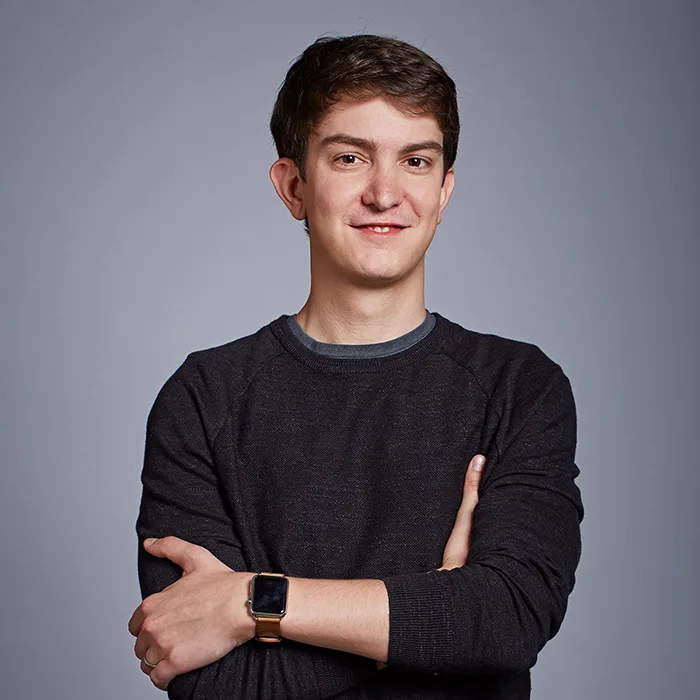
The MoneyPot: Square's David Rusenko on SME Innovation
There is a white hot spotlight on financial services for SME's. The pandemic has been both a burden and an accelerator to adopt digital processes and omnichannel services, and several contenders have stepped up their game to innovate for the needs of SMEs to help them recover and thrive.
The MoneyPot hosts spoke with Square’s GM of Ecommerce, David Rusenko about the ideas and practices that drive their innovation in SME services. You can see portions of that conversation below.
Listen and subscribe to The MoneyPot podcast where we discuss the forces and ideas reshaping the future of money.
Q&A with Dave Rusenko, GM, ECommerce, Square on The MoneyPot
On best practices for creating products and experiences
Q: Do you have any philosophies that you adhere to, or any best practices when leading the teams creating products and experiences at Square?
A: My philosophy has always been that the most important thing is deeply understanding and appreciating your customer's struggles and pain points. A lot of times you'll hear that classic Henry Ford quote: “If I had asked people what they wanted, they would have said faster horses.” He understood very deeply the whole problem was the transportation problem, getting from Point A to Point B and came up with a better solution to that problem.
There's a really good framework that we use at Square called the “Jobs-to-be-Done” framework. Instead of framing your product in the context of what does it do, you frame it in the context of what problem or what job are your customers hiring you to solve?
Listen & subscribe to The MoneyPot:


On top priorities for SMEs
Q: What do you think is the first job that needs to be done for SMEs in particular?
A: SME's need to meet customers where they are instead of insisting that people come to them. There's been a big, decades-long trend where there was a shift to increasing consumer power in the purchasing relationship. So, if you put yourself back about 20 years, you’d see it was much more common to see businesses really have control over the relationship and they would dictate the terms of the interaction. That was the norm then, and now we’re seeing this big transition and shift toward customers having a lot more of the power to dictate the terms of interaction with businesses.
It manifests itself through the consumer saying “I want to do business with you on my terms - when it’s convenient to me in the places that are convenient for me”.
Listen & subscribe to The MoneyPot:
On adapting to customer needs
Q: Covid was an accelerant that turned a want into need. With lockdowns and closed restaurants and entertainment venues, customers needed you to be online. You need to be where your customers are in order to succeed. How can businesses do this?
A: Increasingly, this does place a burden on businesses who need to be present in more than one channel. They need to be present in the channels where their customers are because increasingly, one channel is not enough. It’s just not a large enough piece of the pie to really be able to help a business thrive.
The real challenges are when you’re present in one channel you can keep track of that on the back of a napkin with pen and paper. When you expand into multiple channels, that’s just not possible anymore. It sort of breaks that manual tracking system and you need to adopt a technology platform that helps you track and scale your business. One that really helps you digitize your operations. So while there is some upfront work involved in getting there, on the other side of that you’re actually able to be very reactive to consumer preferences.
Listen & subscribe to The MoneyPot:
On starting to digitize your business
Q: It was a massive shift for businesses at the beginning of Covid to adapt quickly to new digital platforms and channels. Is the juice worth the squeeze?
A: OKAY, there's upfront effort to digitize the operations of your business, but on the other side of that is a lot more opportunity because you’re able to grow your business by reaching and catering to even more consumers. You’re able to increase efficiency and reduce costs by eliminating wastes, and you’re able to minimize manual costs. So given all that, I actually think adopting a platform like this puts businesses in a much stronger position to thrive.
Listen & subscribe to The MoneyPot:
On how fintechs help to adapt
Q: How can fintech help simplify the multi-channel complexity for small businesses?
A: One thing to understand about Square’s offering is that, it’s built first as a platform. What I mean by that is that it’s not merely a collection of products, and there are a lot of products for varying needs for businesses of all shapes and sizes. It’s built on a shared platform where all products integrate and work together really really well. You can track your orders and your customers; you can really track everything and it all feeds into one central place that helps you manage your business and stay on top of the exponentially increasing complexity as you add more channels.
Listen & subscribe to The MoneyPot:
On making it easy to adapt to business needs during Covid
Q: How can creating a completely integrated platform give small businesses avenues to create new revenue streams?
A: A lot of restaurants started selling home goods! Things like flour or even toilet paper, so in some ways they became a retailers. Many businesses also started selling donated meals to first responders, giving them elements of a non-profit. Some restaurants sold meal kits and then there’d be a Zoom session with the chef, like a mini cooking class and social event all at the same time. And so with that one example, they aren’t just restaurants anymore - they have elements of retail, nonprofit, services and events all in one. What that makes Square's platform really powerful is that it's not catered to just one vertical, it can help a really wide range of businesses.
Listen & subscribe to The MoneyPot:
On challenges highlighted & addressed by Covid
Q: In many ways, the pandemic also allowed us to move forward on payments solutions across all experiences. Can you discuss some of the most interesting ones?
A: Not only is this interesting during the pandemic, but it's also something that a lot of us have been wanting for a really long time, even before the pandemic. The idea that a lot of these really perennial problems related to dining out like splitting the check. Each party can scan their own QR code and order independently, you don't have to pass back and forth menus. And things like flagging someone down, to get another drink, or having to wait to pay at the end when you're finished with your meal. You have the ability to just order refills on a tablet or check yourself out quickly and leave almost like getting out of an Uber. There are a lot of perennial problems that we've wanted to solve for a long time. Now, we're launching solutions that both help from a safety perspective as well as provide more consumer conveniences.
Listen & subscribe to The MoneyPot:
On tech adoption and requirements
Q: Finally, do you think there is an issue regarding technology requirements to continue forward with these advances?
A: There's definitely a technology adoption curve! Take QR codes - that presupposes that someone has a smartphone that they're able to scan with. But in many ways, by making the technology more intuitive and more accessible, we're actually lowering the bar to adoption and making that accessible. And that applies equally, whether that's a small business adopting our technology platform, or whether that's a consumer scanning the QR code.
Listen & subscribe to The MoneyPot: